Facelift in Korea: Which Lift Is Right for You? Guide for SMAS, Deep Plane, Mini, Thread, Neck & Laser Lifting

Korea Facelift Guide · SMAS, deep plane, mini, neck, thread, laser lifting
If you are researching facelift in Korea, the hardest part may not be finding a clinic.
It is understanding which type of lift actually matches your face.
Many patients naturally hope for the smallest procedure possible: a laser treatment, thread lift, or mini facelift.
That is completely understandable. But the procedure that sounds easiest is not always the one that can create the result you want.
This guide explains the main types of facelift and lifting procedures in Korea, then helps you compare them by definition, sagging area, recovery time, cost, real reviews, and active deals.
Quick Answer
The best lift is not always the biggest one,
and it is not always the smallest one.
The right lift is the one that matches your sagging pattern, target area, skin condition, recovery time, and expected result. Laser lifting, thread lift, mini facelift, SMAS facelift, deep plane facelift, midface lift, and neck lift are not the same decision.
👇 Tap to jump 👇
1. What does “facelift” mean in Korea?
2. Main types of facelift and lifting procedures
3. How to choose the right lift
1. What does “facelift” mean in Korea?
Lifting does not mean one procedure
In Korea, the word lifting can refer to many different treatments.
It may mean a surgical facelift, such as mini facelift, SMAS facelift, deep plane facelift, midface lift, or neck lift.
It may also refer to less invasive treatments such as thread lift, laser lifting, HIFU, or RF skin tightening.
That is why comparing prices first can be misleading. Before choosing a clinic or promotion, you need to understand whether your concern is mainly skin laxity, mild sagging, jowls, midface descent, or loose neck skin.

Facelift and lifting options in Korea range from non-surgical skin tightening to deeper surgical lifts.
Non-surgical lifting
Laser lifting, RF lifting, HIFU, and some V-line tightening treatments usually focus on collagen support, skin quality, and mild tightening.
Minimally invasive lifting
Thread lift uses dissolvable or non-dissolvable threads to lift mild sagging and support collagen, usually with shorter downtime than surgery.
Surgical facelift
Mini facelift, SMAS facelift, deep plane facelift, midface lift, and neck lift can reposition tissue more structurally.
Combination planning
Some patients need lifting plus fat grafting, liposuction, skin treatment, or eyelid surgery depending on facial balance.
Olivia’s note
Do not start by asking, “Which procedure is popular?” Start by asking, “Where is my face aging?”
A good facelift plan should match the aging pattern, not just the procedure name.
2. Main types of facelift and lifting procedures in Korea
Definition first, then comparison
Each lifting option below includes the same quick summary format: Surgical?, Best for, Strength, Recovery, Age range, and Main area. This makes it easier to understand the difference before moving to price or reviews.
Laser Lifting in Korea
Laser lifting is a non-surgical skin-tightening treatment. It does not remove skin or reposition deep facial tissues. Instead, energy-based devices such as HIFU, RF, Onda, Titanium, or Ultherapy-style treatments support collagen production and improve mild skin laxity.
Laser lifting may be helpful if your main concern is early looseness, skin texture, or a slightly tired jawline. But if you have clear jowls, loose neck skin, or strong facial sagging, laser lifting alone may not create the structural change you want.
| Surgical? | No |
|---|---|
| Best for | Early skin laxity, collagen support, subtle tightening |
| Strength | Mild |
| Recovery | Minimal to a few days |
| Age range | 20s–40s, or maintenance after surgery |
| Main area | Skin quality, mild lower-face looseness, jawline support |

Case from  CHEONGDAM ECLAT DE Clinic · Ultherapy Prime
This review is useful because the patient explains laser lifting as a slower collagen-based process, not an instant facelift replacement. It also describes why a younger patient may choose subtle jawline support rather than dramatic lifting.

said
“It’s not really about instant results. It’s more of a slow process where your skin gradually tightens as collagen rebuilds over time.”
Procedure reviewed at CHEONGDAM ECLAT DE Clinic
Thread Lift in Korea
A thread lift uses threads placed under the skin to create a temporary lifting effect and support collagen production. It can help with mild sagging around the cheeks, jawline, and under-chin area, especially when the patient wants shorter downtime than surgery.
Thread lift should not be treated as a full replacement for surgical facelift when the sagging is already strong. It is better understood as a mild-to-moderate lift, maintenance option, or jawline support treatment.
| Surgical? | Minimally invasive |
|---|---|
| Best for | Mild sagging, short downtime, early jowls, jawline support |
| Strength | Mild–moderate |
| Recovery | 2–7 days, depending on swelling, bruising, and combination procedures |
| Age range | Late 20s–40s, sometimes older patients with realistic expectations |
| Main area | Cheeks, jawline, under-chin, mild lower-face sagging |

Case from  GRACE Plastic Surgery · Mint lift / under-chin lipo
This 6-month update is useful because it explains both the benefit and the limitation of thread lift. The patient still felt the jawline was improved, but also clearly understood that the result was not permanent.

Muji said
“My jawline is still snatched compared to six months ago... Is it permanent? Nah. Is it a fun little refresh when you need a glow-up? Absolutely.”
Procedure reviewed at GRACE Plastic Surgery
Mini Facelift in Korea
A mini facelift is a smaller surgical facelift that usually focuses on early lower-face sagging, especially around the jawline and jowls. It uses a more limited surgical approach than a full facelift and usually has a shorter recovery period.
Many patients like the idea of a mini facelift because it sounds less invasive. But if your goal is to improve strong jowls, deep folds, or loose neck skin, a mini facelift may not be enough.
| Surgical? | Yes |
|---|---|
| Best for | Early jowls, lower-face sagging, jawline blur |
| Strength | Moderate |
| Recovery | 1–2 weeks for early social recovery, depending on scope |
| Age range | Late 30s–50s, depending on skin and sagging pattern |
| Main area | Lower face, jawline, jowls, under-chin contour |

Case from  SAERO Plastic Surgery · Rhinoplasty + mini-lift
This case fits the main message of this article: the patient did not know exactly which procedure she needed, but the doctor planned mini-lift together with other facial balance concerns.

said
“I also decided to have mini-lift done together... my chin had some fat and looked a little bit saggy for my face. I didn’t know what procedure I needed exactly, but Dr. Park Young Kyu developed a great surgery plan.”
Procedure reviewed at SAERO Plastic Surgery
SMAS Facelift in Korea
A SMAS facelift lifts and repositions the deeper support layer under the skin, called the SMAS layer. This makes it stronger than simple skin tightening because it addresses the structure that supports the face, not just the skin surface.
SMAS facelift is often considered when there is noticeable lower-face sagging, jowls, jawline loss, or deeper folds. It can create a stronger and longer-lasting result than laser lifting, thread lift, or mini facelift, but it also requires more recovery and careful surgical planning.
| Surgical? | Yes |
|---|---|
| Best for | Jowls, jawline sagging, lower-face aging, stronger tissue descent |
| Strength | Strong |
| Recovery | 2–3 weeks for early social recovery, longer for final settling |
| Age range | 40s–60s, depending on sagging pattern |
| Main area | Lower face, jawline, cheeks, jowls |

Deep Plane Facelift in Korea
A deep plane facelift works below the SMAS layer and releases deeper facial tissues to lift the face more structurally. It is often discussed for midface descent, deep nasolabial folds, cheek sagging, and more advanced facial aging.
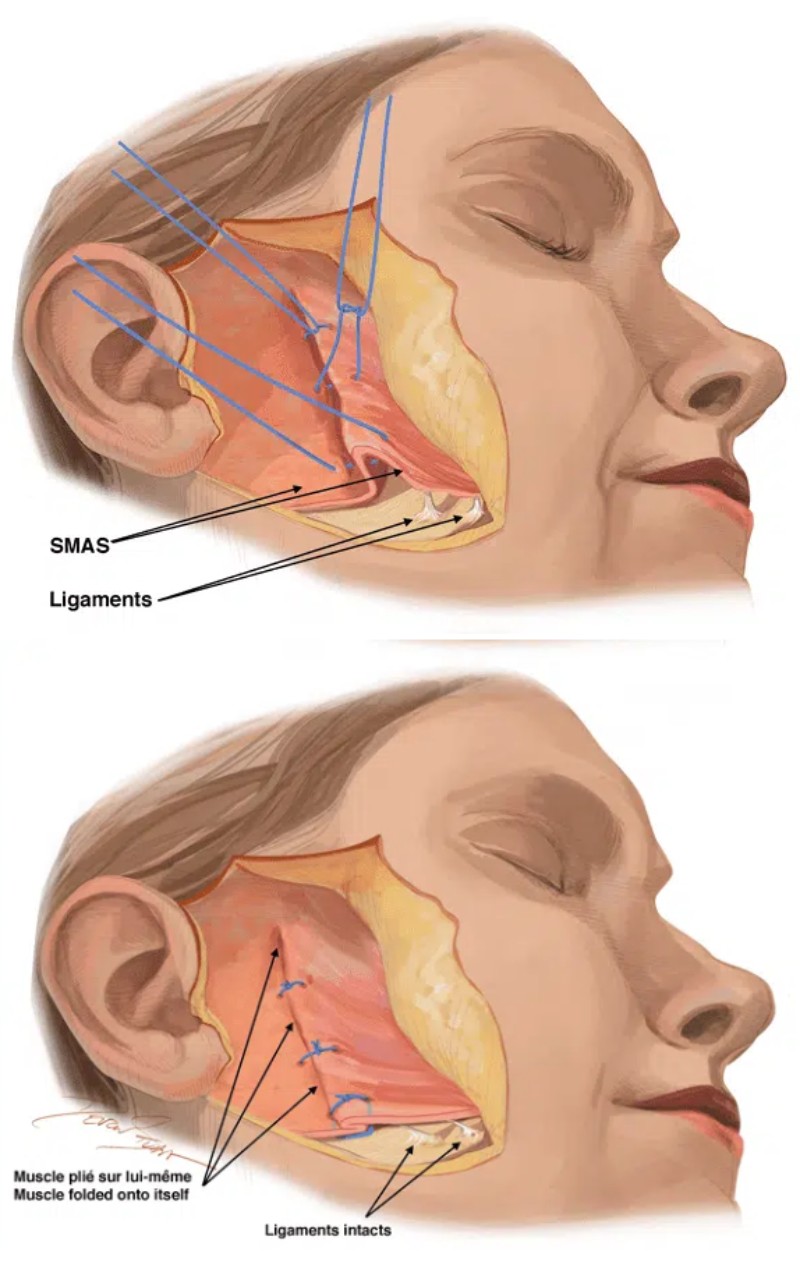
Deep plane facelift can create a powerful and natural-looking lift when done well, but it is not automatically the best choice for everyone. It is usually considered when the sagging pattern needs deeper structural correction and the patient can accept a larger surgical plan and recovery period.
| Surgical? | Yes |
|---|---|
| Best for | Advanced sagging, midface descent, deep folds, cheek descent |
| Strength | Advanced / strongest |
| Recovery | 3–4 weeks for early social recovery, longer for final settling |
| Age range | 50s–70s, or advanced sagging cases |
| Main area | Midface, cheeks, nasolabial folds, jawline |
Midface Lift in Korea
A midface lift focuses on sagging in the cheek area, under-eye to cheek transition, and nasolabial fold region. It is not mainly for loose neck skin or lower jawline sagging.
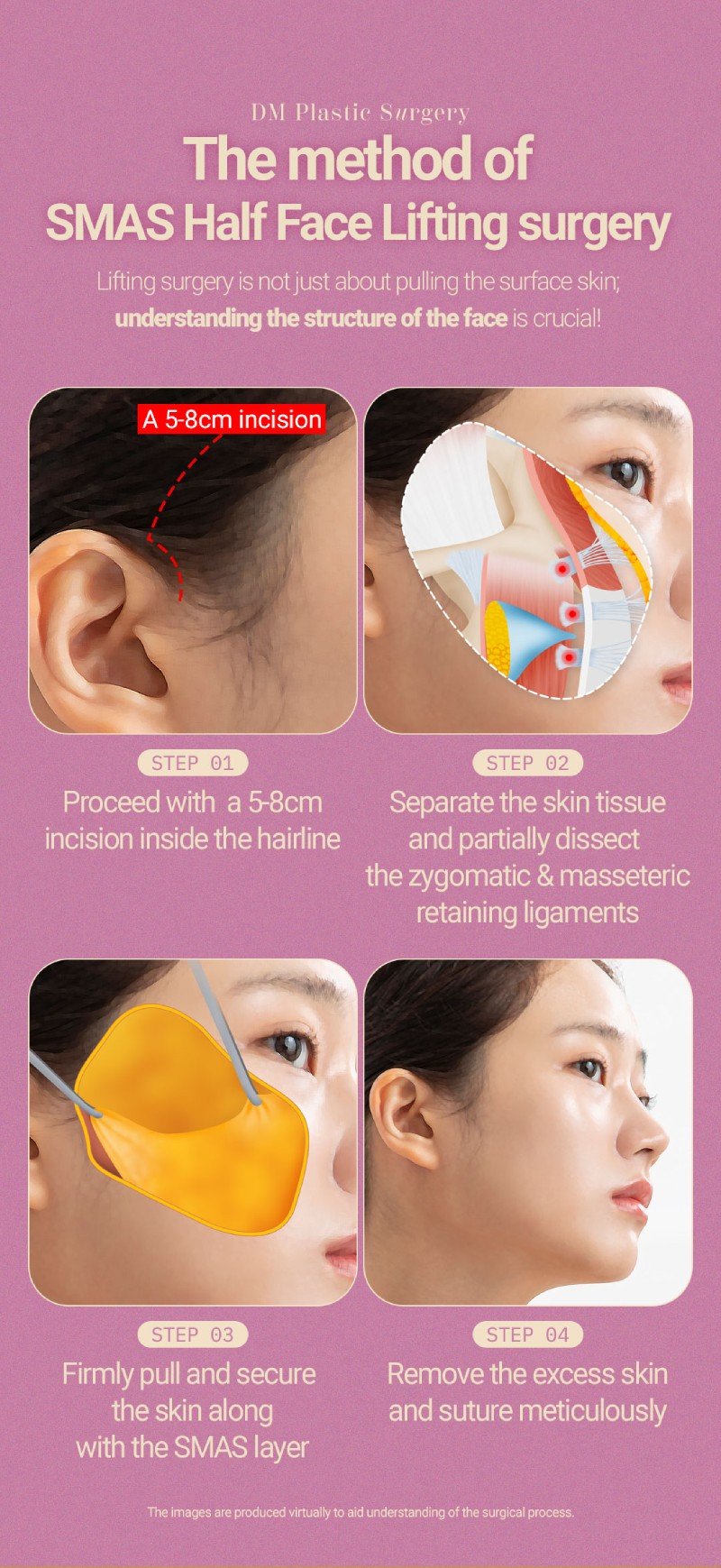
This option may be considered when the face looks tired because the cheeks have dropped, but the neck or lower face is not the main concern. In real consultations, midface aging may also be discussed together with fat grafting, deep plane facelift, or lower-face lifting depending on facial structure.
| Surgical? | Yes |
|---|---|
| Best for | Cheek descent, midface sagging, nasolabial folds, tired-looking midface |
| Strength | Targeted / moderate–strong |
| Recovery | 2–3 weeks depending on method and combination procedures |
| Age range | 40s–60s, depending on cheek descent and volume loss |
| Main area | Cheeks, midface, under-eye to cheek area |
Neck Lift and Jawline Lift in Korea
A neck lift focuses on loose neck skin, neck bands, double chin area, and jawline definition. Some patients search for facelift, but their biggest concern is actually the neck or the area under the chin.
If the neck is loose, a face-only lift may not be enough. In many cases, neck lift, platysma muscle fixation, chin liposuction, or facelift plus neck lift may be discussed together for a more balanced result.
If your main concern is directly under the chin rather than the whole lower face, it may help to first separate whether the issue is chin fat, loose skin, platysma muscle looseness, or neck sagging.

| Surgical? | Yes, or surgical combination depending on case |
|---|---|
| Best for | Loose neck skin, turkey neck, double chin, under-chin fullness, jawline definition |
| Strength | Moderate–strong |
| Recovery | 1–3 weeks depending on incision, liposuction, muscle fixation, and swelling |
| Age range | 40s–60s+, or younger patients with double chin / under-chin structure concerns |
| Main area | Neck, under-chin area, jawline |

Case from  SHINSANG Plastic Surgery · Chin liposuction + platysma muscle fixation + mini neck lift
This case is important because the patient expected a double-chin procedure, but the consultation found fat and tissue under the muscle plus spare skin. It shows why the smallest plan is not always the one that matches the anatomy.

said
“Dr. Lee used an ultrasound scanner to check what tissues lay beneath the skin on my neck... a lot of my double chin comes from fat that is stored beneath my muscle and that I have some spare skin and would require an incision to remove it all.”
Procedure reviewed at SHINSANG Plastic Surgery
3. How to choose the right lift
Use simple decision layers, not one big chart
After you understand the definitions, you can compare lifting options more simply: by strength, recovery time, sagging area, and age range.

Not every lift is equally strong. The right choice depends on sagging level, target area, and expected result.
Lifting strength: from skin tightening to structural facelift
Laser Lifting
Best for skin laxity, collagen support, and early looseness.
Thread Lift
Best for mild sagging, short downtime, and jawline support.
Mini Facelift
Best for early jowls and lower-face sagging.
SMAS Facelift
Best for noticeable jawline, jowls, and lower-face sagging.
Deep Plane Facelift
Best for deeper folds, midface descent, and advanced sagging.
Choose by recovery time
Laser lifting
Usually best when you want subtle support with little downtime.
Thread lift
Shorter downtime than surgery, but swelling or bruising can still happen.
Mini facelift
A surgical option with more change than threads, but less scope than full facelift.
SMAS facelift / Midface lift
More structural lifting and more recovery planning.
Deep plane or larger surgical facelift
Advanced correction usually needs more time before social recovery.
Choose by sagging area
| Main concern | Possible options |
|---|---|
| Skin laxity, fine looseness | Laser lifting, RF/HIFU, skin tightening |
| Mild cheek or jawline sagging | Thread lift, mini facelift, laser combination |
| Early jowls | Mini facelift, SMAS facelift |
| Strong jowls and lower-face sagging | SMAS facelift, surgical facelift plan |
| Midface descent and deep folds | Deep plane facelift, midface lift, customized plan |
| Loose neck skin or turkey neck | Neck lift, facelift + neck lift, platysma planning |
| Overall facial aging | SMAS, deep plane, full facelift, hybrid surgical plan |
If the row that feels closest to your concern is “loose neck skin,” “double chin,” or “platysma planning,” the double-chin guide may be a better next step before comparing larger facelift options.
Choose by age range — but not age alone
| Age range | Often considered |
|---|---|
| 20s–30s | Laser lifting, thread lift, V-line tightening, prevention-focused care |
| Late 30s–40s | Thread lift, mini facelift, laser combination, early lower-face correction |
| 40s–50s | Mini facelift, SMAS facelift,deep plane, neck/jawline planning |
| 50s–60s+ | SMAS, deep plane, neck lift, full facelift plan |
| Advanced sagging or revision cases | Customized surgical plan based on tissue, skin, previous procedures, and anatomy |
Olivia’s note
Age is only a starting point. Skin thickness, facial fat, bone structure, previous procedures, and the exact area of sagging matter more than age alone.
4. Facelift cost in Korea
Price depends on the type of lift and the actual plan
Prices are included here because they help explain the structure — not because this is only a price page. In facelift and lifting procedures, price usually follows procedure type + treatment area + anesthesia + surgeon experience + aftercare + combination procedures.
| Procedure | Estimated range in Korea | Notes |
|---|---|---|
| Laser lifting | 250,000 – 1,500,000+ KRW$167 – $1,000+ | Usually per device, shots, or session plan |
| Thread lift | 900,000 – 3,000,000+ KRW$600 – $2,000+ | Depends on thread type, number, area, and combination with liposuction |
| Mini facelift | 2,000,000 – 5,000,000+ KRW$3,333 – $5,333+ | Early sagging, lower-face or limited surgical plan |
| SMAS facelift | 8,000,000 – 13,000,000+ KRW$5,333 – $8,667+ | Stronger surgical lift for jowls and lower-face sagging |
| Deep plane facelift | 10,000,000 – 15,000,000+ KRW$8,000 – $12,000+ | Higher complexity, deeper structural correction |
| Neck lift | 3,000,000 – 6,000,000+ KRW$2,000 – $4,000+ | Often combined with facelift, chin liposuction, or platysma planning |
| Full face + neck lift | 10,000,000 – 20,000,000+ KRW$6,667 – $13,333+ | Depends heavily on scope, anesthesia, surgeon, and aftercare |
Extra costs to check before comparing clinics
anesthesia fee · VAT · prescription medicine · bandage / compression · stitch removal · swelling care · scar care · hotel stay · follow-up visits · additional procedures after in-person exam
Olivia’s note
Price is helpful only when you know what the price includes. A laser lifting event, a thread lift package, and a surgical facelift plan are not the same decision. Compare the area, strength, recovery, and expected result first.
5. Facelift recovery timeline
Recovery depends on how deep the lift is
Facelift recovery is not one fixed timeline. Laser lifting and thread lift are usually lighter, while SMAS, deep plane, full facelift, and neck lift need more planning. International patients should think about follow-up, bandage care, stitch removal, swelling, bruising, and flight timing.
Surgery, bandage, swelling, early discomfort
Surgical cases may involve bandages, wound care, prescriptions, and early follow-up. Non-surgical lifting usually has lighter downtime.
Bruising and swelling become more visible
This is not the right time to judge the final result. Some patients need bandage removal, swelling care, or stitch checks.
Stitch removal and early daily-life return
Many surgical patients plan follow-up around this period. Social recovery varies by procedure and swelling pattern.
More natural but still healing
Bruising improves and facial tightness starts to soften, but residual swelling or numbness can remain.
Results settle more clearly
Scars, swelling, tightness, and facial balance continue to refine over time.
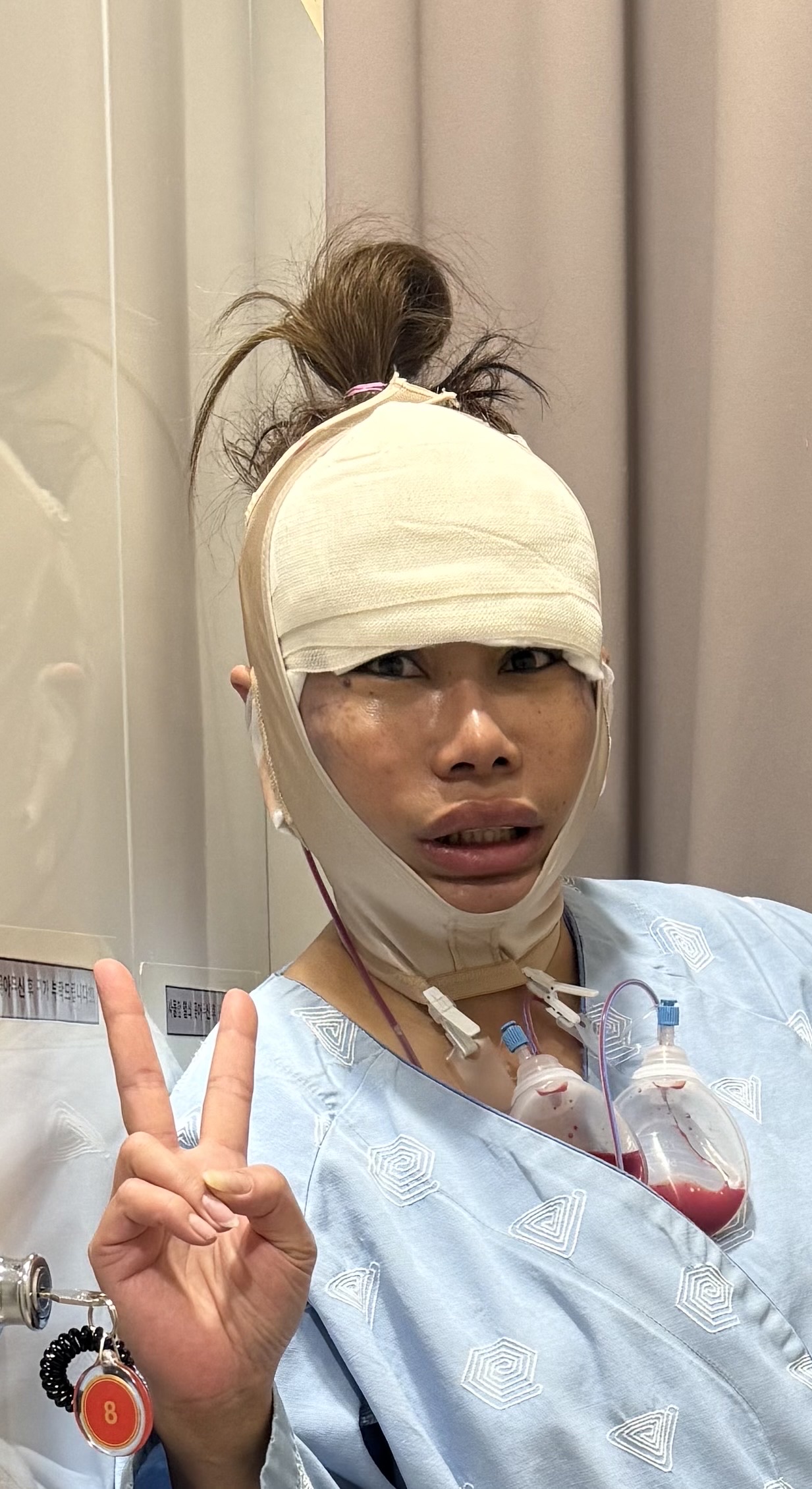
Case from  LITING Plastic Surgery · L-shaped incision facelift
This surgical lifting review is useful for international patients because it includes the real flow: consultation, surgery, bandage, medication, Day 2 bandage removal, Day 7 stitch removal, swelling care, and paperwork before leaving Korea.

said
“Day 2 were removing the bandage... He told us to come back in 5 days to remove the stitches out... Day 7 we removed our stitches out.”
Procedure reviewed at LITING Plastic Surgery
6. Related Trends guides
Use this article as a facelift hub
If you are not ready for surgical facelift yet, laser lifting is often the first area to compare. These related Trends articles connect this facelift guide with more specific lifting content inside All about MEI.


7. Real TALKS Reviews and Active Deals by Lift Type
Use real examples after you understand the procedure
Facelift results can look very different depending on the type of lift, the sagging area, and the patient’s goal. Use TALKS reviews and active promotions to compare real patient experiences, recovery notes, and next-step options by lift type in Korea.
| Lift type | What to compare | Real cases & deals |
|---|---|---|
| Laser Lifting | Skin tightening, collagen support, early looseness, jawline definition | |
| Thread Lift | Mild sagging, short downtime, jawline support, under-chin contour | |
| Mini Facelift | Early jowls, lower-face sagging, jawline blur, small surgical lift | |
| SMAS / Deep Plane | Jowls, lower-face aging, midface descent, deep folds, advanced sagging | |
| Neck / Jawline Lift | Loose neck skin, double chin, turkey neck, under-chin area, platysma |


How to use these links
TALKS reviews help you understand recovery and patient experience.
Promotions are useful only after you understand which lift type may fit your case.
8. FAQ
What is the difference between facelift and lifting treatment in Korea?
Facelift usually means surgical lifting that repositions tissue, while lifting treatment may also mean laser lifting, HIFU, RF tightening, or thread lift. In Korea, the word “lifting” is broad, so the exact procedure matters.
Which facelift is right for me?
The right lift depends on your sagging area, sagging strength, recovery time, age, skin quality, and expected result. Start with the concern area first: skin, jawline, jowls, midface, or neck.
Is mini facelift enough for jowls?
Mini facelift may help early jowls and lower-face sagging. If jowls are stronger or the neck is loose, SMAS facelift, neck lift, or a more structural surgical plan may be needed.
What is the difference between SMAS and deep plane facelift?
SMAS facelift lifts the deeper support layer under the skin. Deep plane facelift works below the SMAS layer and can address deeper tissue release, midface descent, and advanced folds. The better option depends on anatomy, not popularity.
Can thread lift replace facelift surgery?
Thread lift can help mild sagging and short-downtime jawline support, but it usually cannot replace surgery when there are strong jowls, loose neck skin, or deeper tissue descent.
Can laser lifting replace facelift surgery?
Laser lifting can support collagen, skin tightening, and mild laxity. It does not remove skin or reposition deep tissue, so it is not a full replacement for surgical facelift in stronger sagging cases.
How much does a facelift cost in Korea?
Cost depends on procedure type, treatment area, anesthesia, surgeon, clinic, aftercare, and whether other procedures are combined. Laser lifting and thread lift are usually lower than surgical facelift, while SMAS, deep plane, and full face plus neck lift plans can be much higher.
How long is facelift recovery in Korea?
Laser lifting may have minimal downtime. Thread lift may take a few days. Mini facelift may take 1–2 weeks. SMAS facelift may take 2–3 weeks, and deep plane or larger facelift plans may take 3–4 weeks or more for social recovery.
How long should I stay in Korea after facelift surgery?
Plan enough time for early follow-up, bandage checks, stitch removal if needed, and swelling care. The exact timing should be confirmed by the clinic because it depends on the procedure and your healing pattern.
Final thought
Facelift in Korea is not one fixed procedure.
It can mean laser lifting, thread lift, mini facelift, SMAS facelift, deep plane facelift, midface lift, neck lift, or a combination plan.
The right question is not only “Which lift is popular?”
It is “Where is my face sagging, how much change do I want, and what level of recovery am I ready for?”
* USD estimates use 1 USD = 1,500 KRW for simple comparison.
* Price ranges are educational estimates for comparison and are not fixed quotes.
* Recovery timing varies by person, procedure, anesthesia, surgeon, aftercare, and combination procedures.
* TALKS reviews are individual experiences and do not guarantee the same result for every patient.
Written by Olivia Bennett, Medical Coordinator on All about MEI